One of the most common questions I get from election administrators about artificial intelligence is also one of the most practical. They want to know how to tell whether something – particularly an image or a video – is real.
The questions shows up in lots of ways: Is this image actually about something happening within our office or one of our voting locations? Is this screenshot legitimate? And once they know, what do they do with it, respond publicly, escalate internally or just monitor?
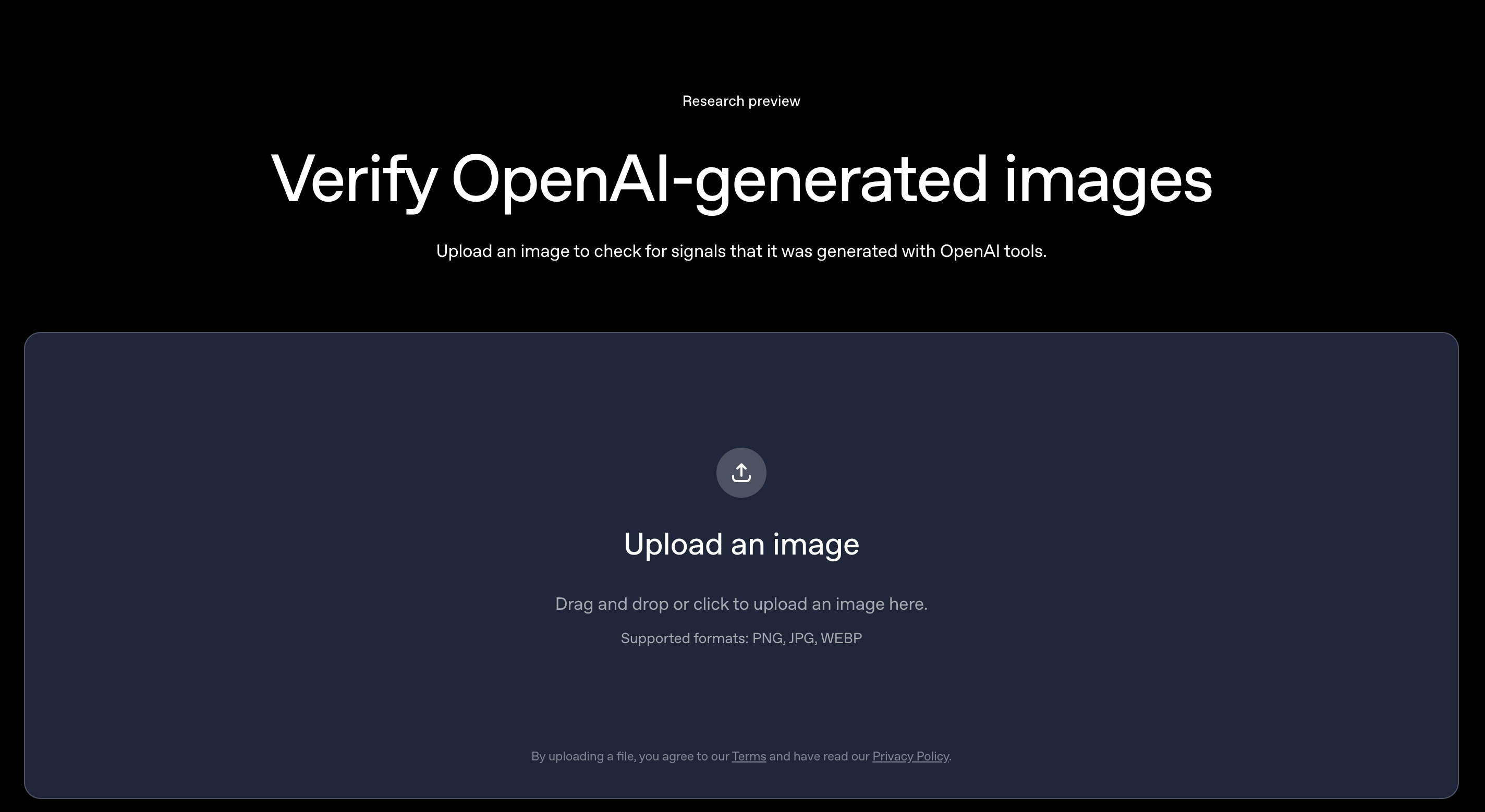
OpenAI recently released a public verification tool as part of a broader content provenance effort that starts to answer that question in some situations. The tool lets you upload an image and check whether it carries signals associated with images generated by OpenAI systems, including ChatGPT.
In plain terms, if an image came out of certain OpenAI tools, the verifier may be able to detect it. That is genuinely useful, but it is also narrow.
Now the bad news: This is not a universal “is this AI?” machine. It will not catch every AI-generated image, and it says nothing about whether an image is accurate, misleading or being used out of context. A “clean” result does not prove an image is authentic; it only means the tool found no signal it recognizes. Like every detection and provenance tool, it can be beaten.
The signals are easy to strip, weaken or sidestep. An image can be screenshotted, cropped, compressed, edited, re-uploaded or made with a different tool entirely, and OpenAI is upfront that the verifier only reads supported signals from OpenAI-generated images. Treat it as one tool in the toolbox, not the whole toolbox.
In the video above, I show that I generated an image in ChatGPT using a photo of myself as a reference, then uploaded the final image to OpenAI’s verification tool to see whether it could identify that the image was AI-generated. Because the image was created through ChatGPT, the verification tool was able to provide useful information about its origin.
Even so, partial answers have value for an election office. If a suspicious image is circulating and the verifier indicates it likely came from OpenAI tools, that is a real data point. It can inform an internal assessment, support a conversation and shape a public response.
The harder problem is communications, and the tool does not touch it. Even after an office confirms that an image is AI-generated, voters may have already seen it, been confused by it and shared it. Knowing the origin of an image does not undo any of that.
This is why the best defense is still a strong offense. An office should not wait for a fake or misleading image to go viral before it starts communicating clearly. The work of building trusted channels with voters happens before there is a problem, across the official website, social media, email lists, local media, community partners, printed materials, public meetings and direct voter education. It means repeating the same key messages before, during and after voting, so that voters already know where to find official information by the time they need it.
The spread of AI-generated content is not a reason for election offices to panic, but it is a reason to prepare. Provenance tools, watermarking and verification systems are useful, and they may make some synthetic content easier to spot and some bad information harder to spread unchecked.
Election officials with questions about AI-generated content, verification tools or proactive communications planning can reach me at [email protected].
Originally posted on the AI and Elections Substack, June 3, 2026. Read the original ↗