
Last week, with Arizona State University's Mechanics of Democracy Laboratory (where I am a senior fellow and support the lab's work), we ran a tabletop exercise for the Pinal County Recorder's Office and the county's elections department. We used a game we built.
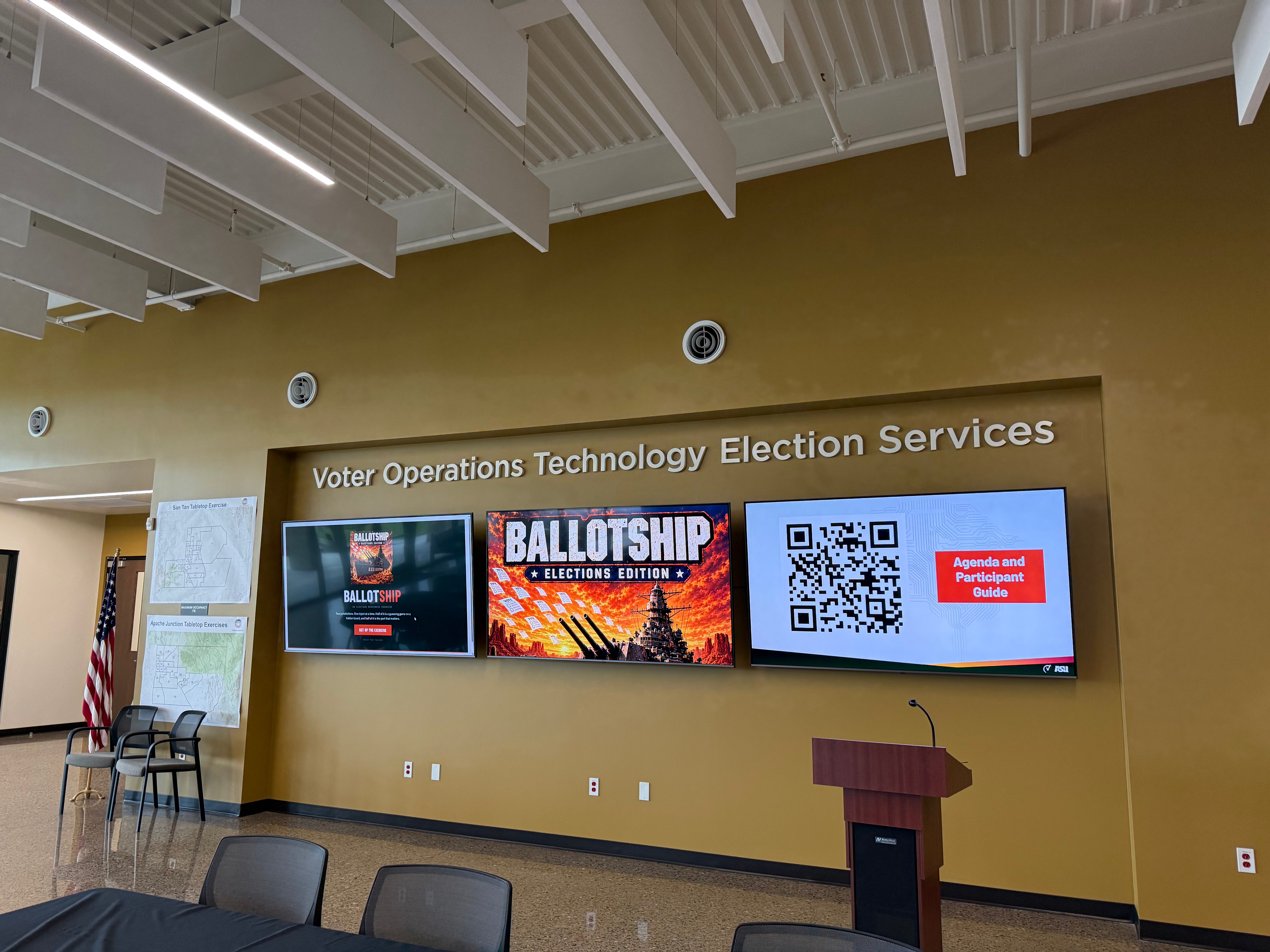
It’s called Ballotship. (And yes, of course, we played songs from the Top Gun soundtrack throughout the exercise.)
Ballotship is a vibe-coded tabletop exercise tool. Teams draw fictional election disruptions and work through them together. They figure out what’s happening, who needs to be in the room and what they’d do to keep the election moving.
How it started
The idea was simple. What if we borrowed the structure of a game most people already know and used it to run a tabletop exercise?
A few years ago, that idea likely would have stayed an idea. Building even a basic interactive tool meant finding a developer, writing specs, spending a bunch money and waiting. Generative AI coding tools have shortened that a lot. We built a version, played it, quickly fixed what didn’t work and played it again.
What happened in the room
The scenarios covered power outages, polling place problems, cyber incidents, severe weather and Jared’s bad chili.
Election officials sat with county leaders, elected officials and other partners. Each person brought something different. They argued over options, found gaps and sorted out who would handle what.
That’s the job of a tabletop exercise. You talk through a bad day before it happens. You also get to know the people you’d be calling if it did. That second part – actually building relationships and becoming familiar with other folks – matters more than people think.
The game gave people a reason to lean in and push back on each other. A lot of the best discussion went well past the walls of the elections office.
Vibe coding our way through this
We knew tabletop exercises work. We wanted one that was more interactive and easier to adapt. So we built one, tested it and put it in front of election officials.
The game doesn’t replace a good facilitator, careful scenario design or people who know how elections run. It just makes it much easier to build a tool around that work. For people who have spent their careers in election offices, that’s a big deal.
Sometimes the result is a game about running an election through floods, cyberattacks, blackouts and bad chili.
You can see a demo here:
If you’re an election official or from an organization that supports election officials and you want us to run Ballotship with your office or partners, email me at [email protected].
Notes of appreciation
A big thanks to Pinal County Recorder Dana Lewis and her team for playing along. And thanks also to the Mechanics of Democracy Laboratory team for supporting and helping turn a rough idea into something we could put in front of practitioners.
Originally posted on the AI and Elections Substack, September 30, 2026. Read the original ↗